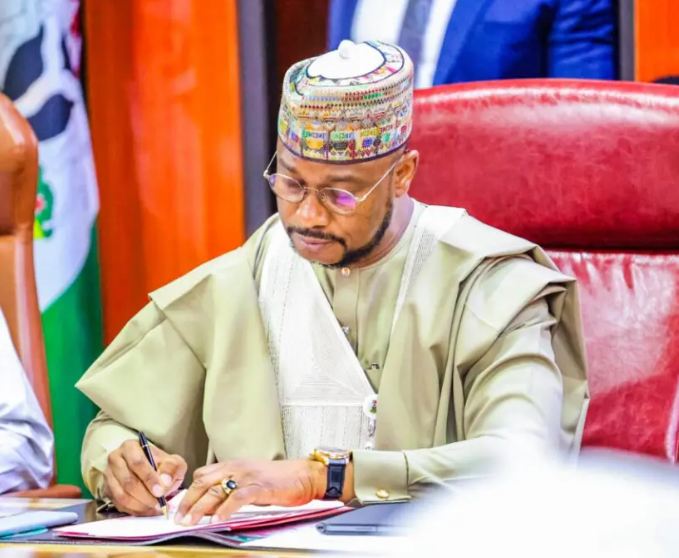

Few Nigerian politicians have walked the tightrope of controversy and resilience quite like Bukola Saraki. Once hailed as a reform-minded Senate President, his political journey has been marked by high-profile trials, party battles, and an enduring determination to stay relevant in Nigeria’s fast-changing political climate.
As Nigeria approaches another election cycle, analysts are revisiting Bukola Saraki’s tumultuous years — a period defined by legal challenges, shifting alliances, and calculated political maneuvers that shaped both his career and the nation’s legislative history.
A Political Heir Who Built His Own Identity
Born into one of Nigeria’s most influential political families, Bukola Saraki inherited a legacy of leadership from his late father, Dr. Olusola Saraki, a respected political figure in Kwara State. Yet, Bukola carved his own path.
As governor of Kwara from 2003 to 2011, he was praised for fiscal reforms, healthcare expansion, and rural development projects that modernized the state’s economy. His popularity in Kwara laid the groundwork for a bigger national ambition — one that would soon put him at the center of Nigeria’s most dramatic political trials.
From Senate Presidency to Political Crossfire
In 2015, Bukola Saraki pulled off one of the most surprising upsets in Nigerian political history. Defying his party’s leadership, he emerged as Senate President through a coalition of unlikely allies. His victory immediately sparked tension within the ruling All Progressives Congress (APC), with many accusing him of betrayal.
That same year, his leadership faced relentless opposition from within the party and outside of it. Committee disputes, legislative standoffs, and allegations of corruption became defining themes of his term. Yet, observers noted that Bukola Saraki proved to be a skilled negotiator — maintaining control of the Senate even as political pressure mounted.
The Legal Battles That Tested His Resolve
The phrase “days of trial” took on a literal meaning for Bukola Saraki in 2015 when the Code of Conduct Tribunal (CCT) charged him with false declaration of assets. The case lasted nearly three years, dominating headlines and shaping public opinion.
While his opponents saw it as justice catching up with power, supporters called it a politically motivated attempt to silence a rising force. In 2018, the Supreme Court cleared Saraki of all charges, marking a major legal victory. Still, the ordeal left deep political scars and influenced his future relationships within Nigeria’s power structure.
Read More: A Billion Reasons to Stay Away from Racism to Allow Peace in the Society
Don’t Miss: Must Read: How to Survive During This Tinubu Regime as a Nigerian Citizen
Defections and Political Survival
Following his acquittal, Bukola Saraki returned to the opposition, defecting from the APC to the Peoples Democratic Party (PDP). His move reignited his influence in the North-Central region and positioned him as a key voice in the PDP’s bid to reclaim power.
Political analysts describe Saraki as one of the few Nigerian politicians capable of surviving both defeat and controversy. “He’s a master tactician who understands timing and loyalty,” said Professor Adetunji Olowu, a political scientist at the University of Ilorin. “Every setback for Bukola Saraki tends to become a platform for his next comeback.”
Philanthropy Beyond Politics
Away from politics, Bukola Saraki has continued to build a reputation for philanthropy. Through his foundation, he funds educational scholarships, medical outreaches, and women empowerment programs across Kwara and neighboring states. His initiatives in healthcare — particularly free maternal care projects — have drawn quiet praise even from critics who disagree with his political style.
Eyes on the Future
As the nation grapples with economic uncertainty and political tension under new leadership, speculation continues over Saraki’s next move. Will he make another bid for the presidency? Will he focus on rebuilding his party’s influence? Sources close to his camp say Bukola Saraki remains active behind the scenes, working to unite opposition forces and shape Nigeria’s political discourse.
Insiders also hint at ongoing consultations with regional leaders about a possible comeback strategy ahead of the 2027 elections. Though nothing is confirmed, Saraki’s history suggests that he rarely fades into the background for long.
A Legacy Still Being Written

Love him or criticize him, Bukola Saraki remains one of the most enduring figures in Nigeria’s Fourth Republic. His ability to withstand political storms — from courtroom battles to legislative showdowns — reflects both his ambition and his survival instincts.
His “days of trial” are more than a personal narrative; they mirror the struggles of a democracy still learning to balance justice, loyalty, and leadership.
Whether his next chapter brings redemption or rivalry, one thing is clear: Bukola Saraki continues to stand as a symbol of the unpredictable and often unforgiving nature of Nigerian politics.
Don’t Miss: 10 Facts to Be Aware About President Tinubu That You Did Not Know
Express your thoughts via the comment section below, and share…

- Terrorism Alarm: Macron Tells Tinubu ‘No One Can Watch’ - December 7, 2025
- Power Deal: Netflix to Buy Warner Bros for $72bn - December 7, 2025
- Kano Hosts 4,444 Quran Reciters in Major Prayer Against Banditry - December 6, 2025